
 User:
User:



Internal Reflection
Storyboard 
When the beam propagates through one medium and reaches an edge with another medium, it can be transmitted to it or reflected within the first. In this last case we talk about an internal reflection.
The angle with which it falls is defined between the normal to the surface between both means and the direction of propagation. Similarly, the reflected one is defined as a function of the normal one and the direction of propagation after reflection.
In general both angles are identical.
ID:(1261, 0)

Reflection of Light Objects
Definition
If you think of light as particles (photon) that affects a non-transparent body, it is reflected.
The reflection occurs so that the angle of insidence is equal to the angle of reflection.
On the other hand, the photons do not change in frequency or wavelength, that is, they only suffer a change in the direction of propagation with respect to the plane of impact.
ID:(195, 0)

A Mirror
Image
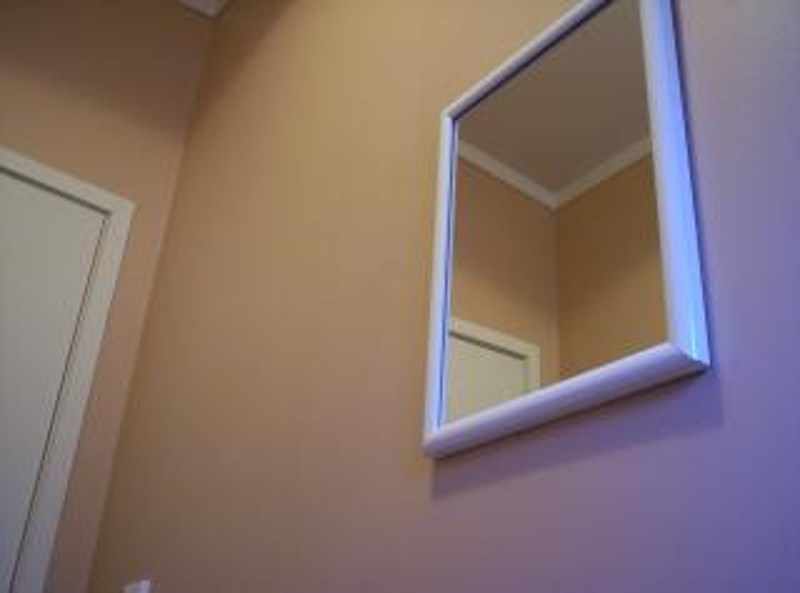
A mirror looks like a window to another room. The effect is created by the reflected light that the eye assumes was not reflected but comes from an object behind the mirror.
ID:(9777, 0)

Two Mirrors in an Angle
Note
If two angles are at an angle less than 90 degrees a beam that is reflected in one of these will reach the second.

ID:(9781, 0)

Internal Reflection
Description
When the beam propagates through one medium and reaches an edge with another medium, it can be transmitted to it or reflected within the first. In this last case we talk about an internal reflection. The angle with which it falls is defined between the normal to the surface between both means and the direction of propagation. Similarly, the reflected one is defined as a function of the normal one and the direction of propagation after reflection. In general both angles are identical.
Variables

Calculations
 to
to  ,
then, select the variable:
,
then, select the variable:  to
to 
Calculations
Variable
 Given
Calculate
Given
Calculate
 Target :
Equation
To be used
Target :
Equation
To be used

Equations

Examples
If you think of light as particles (photon) that affects a non-transparent body, it is reflected.
The reflection occurs so that the angle of insidence is equal to the angle of reflection.
On the other hand, the photons do not change in frequency or wavelength, that is, they only suffer a change in the direction of propagation with respect to the plane of impact.
(ID 195)
Para la luz reflejada el angulo del haz respecto de la normal
| $ \theta_i = \theta_r $ |
(ID 3262)
A mirror looks like a window to another room. The effect is created by the reflected light that the eye assumes was not reflected but comes from an object behind the mirror.
(ID 9777)
For the reflected light the angle of the beam with respect to the normal
| $ x =\displaystyle\frac{1}{2} h $ |
(ID 9778)
El angulo de incidencia
| $ \tan \theta_i =\displaystyle\frac{ h }{2 d }$ |
(ID 9779)
If two angles are at an angle less than 90 degrees a beam that is reflected in one of these will reach the second.
(ID 9781)
ID:(1261, 0)